
This reviewed buying guide covers 10 freshwater fish. A photograph appears only when the image shows the exact species alive in an aquarium or other suitable submerged setting and its reuse record is complete; the reviewed profile remains available without substitute imagery while a qualifying photo is sourced.
Use the guide at the retailer to compare breathing, posture, body condition, skin, fins, eyes, and behavior with what is normal for the species. Look at the whole sales system, ask about feeding and recent arrivals, and quarantine every new fish before it shares water or equipment with an established aquarium.
This is an observation guide, not a diagnosis. A fish that looks healthy can still carry pathogens, while transport, lighting, age, sex, and social position can change normal appearance and behavior.
Content transparency
AI-generated draft, human-reviewed publication
This guide was drafted with generative AI used to organize research and prepare an initial version. The AI output was not treated as an authority or source. Dan from the Simply Submerged Aquatics team reviewed the published guide for accuracy and completeness within the scope recorded below.
What the human review covered
- Species identities, scientific names, and public fish-selection copy
- Healthy signs, purchase warning signs, and diagnostic limitations
- Species-normal behavior and temperament distinctions
- Source records, image licences, and TankWise app statements
Key takeaways
- Watch the complete sales tank before choosing an individual fish.
- Compare breathing, posture, body condition, skin, eyes, fins, and response rather than relying on one sign.
- Allow for normal species behavior, including resting, hiding, schooling, feeding patterns, territorial display, and social position.
- Confirm the scientific identity and eventual aquarium needs before buying.
- Only approved exact-species aquarium photographs are shown; a reviewed profile remains available without an image when photography is pending.
- A healthy-looking fish still needs a suitable aquarium; compare it with your saved tank in TankWise before buying.
Store-side field guide
10 fish at a glance
Match the store label to the fish, then jump straight to its healthy and warning signs. SwordtailXiphophorus hellerii
 Celestial Pearl DanioDanio margaritatusCockatoo Dwarf CichlidApistogramma cacatuoidesThree-stripe CorydorasCorydoras trilineatus
 Dwarf Neon RainbowfishMelanotaenia praecox
 African ButterflyfishPantodon buchholzi
 Silver HatchetfishGasteropelecus sterniclaMaingano CichlidMelanochromis cyaneorhabdos
 Iridescent Shark CatfishPangasianodon hypophthalmusTurquoise RainbowfishMelanotaenia lacustris
Check the sales tank before the fish
Watch before anyone taps the glass, feeds the fish, or reaches for a net. Compare breathing, posture, body condition, skin, fins, eyes, and behavior across the group rather than choosing only by color or activity.
Pause if a tankmate is dead, unable to balance, extremely thin, ulcerated, heavily spotted, covered in growth, or breathing with pronounced effort. Ask when the fish arrived, whether it has eaten, and whether nearby tanks share filtration.
A feeding response is useful evidence, but it does not prove that a fish is disease-free. Quarantine every new arrival separately and avoid sharing wet equipment with the established aquarium.
- Observe the group from a distance before selecting a candidate.
- Compare the candidate with several fish of the same species when possible.
- Confirm the store label and scientific identity.
- Ask about arrival date, feeding, treatment history, and shared filtration.
- Check the species against your aquarium in TankWise before purchase.
Swordtail
Xiphophorus hellerii
What to notice
Review these species-specific points together: Straight spine and sword, fin damage, wasting, male aggression.
Confirm that sex, pregnancy, courtship, persistent harassment, body condition, and shimmying are interpreted carefully.
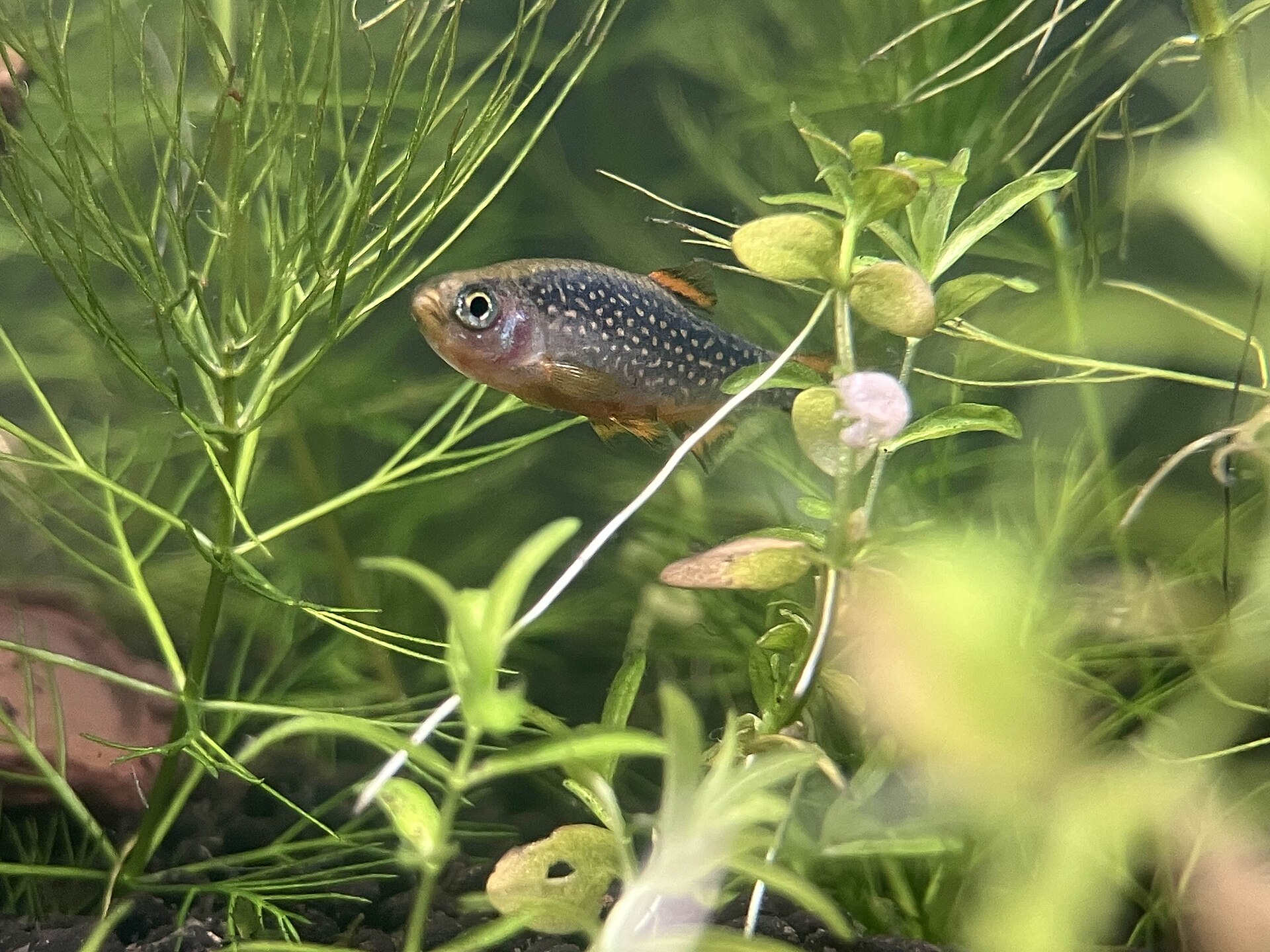
Celestial Pearl Danio
Danio margaritatus

What to notice
Review these species-specific points together: Hollow belly, bent spine, fin damage, sex-ratio aggression.
Confirm that schooling, chasing, colour change, and social position are explained without treating every shy or subordinate fish as ill.
Cockatoo Dwarf Cichlid
Apistogramma cacatuoides
Review these species-specific points together: Body weight, gill rate, fin integrity, territorial pressure on females.
Confirm that territorial display, pair or group dynamics, mouthbrooding where relevant, and persistent bullying are clearly separated.
Three-stripe Corydoras
Corydoras trilineatus
Review these species-specific points together: Correct identity versus true julii, barbels, belly, red patches.
Confirm that resting, hiding, bottom-feeding, nocturnal activity, barbel condition, and breathing behaviour are described in a species-appropriate way.
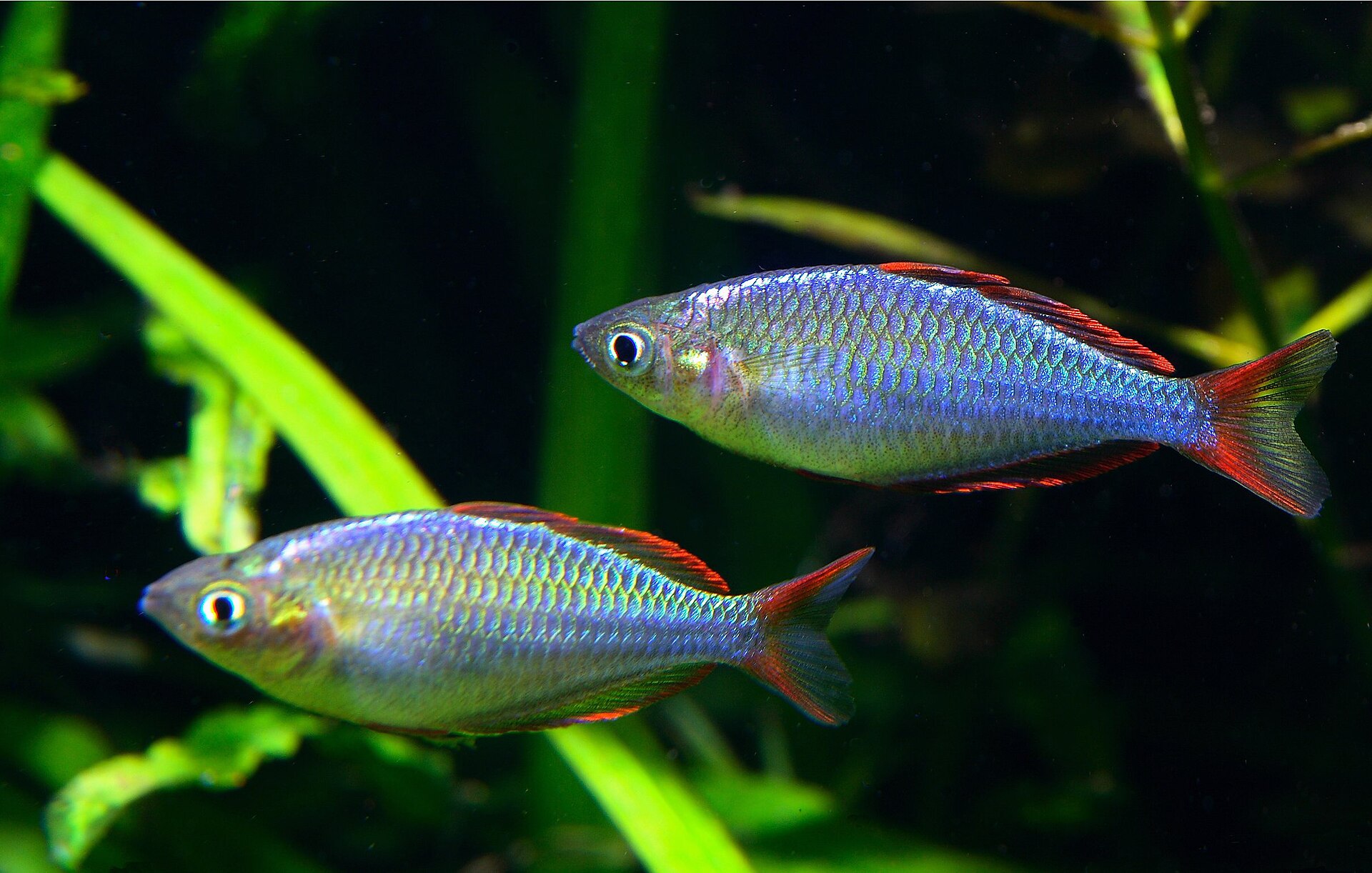
Dwarf Neon Rainbowfish
Melanotaenia praecox

What to notice
Review these species-specific points together: Body sores, mouth damage, full belly, energetic schooling.
Confirm that schooling, chasing, colour change, and social position are explained without treating every shy or subordinate fish as ill.
African Butterflyfish
Pantodon buchholzi
What to notice
Review these species-specific points together: Jaw and eye condition, level posture, surface feeding, jumping and predation.
Confirm the species' normal posture, activity period, social behaviour, hiding, feeding response, and territoriality before labelling behaviour abnormal.
Silver Hatchetfish
Gasteropelecus sternicla
What to notice
Review these species-specific points together: Level body, full chest, fin integrity, surface schooling and jumping.
Confirm the species' normal posture, activity period, social behaviour, hiding, feeding response, and territoriality before labelling behaviour abnormal.
Maingano Cichlid
Melanochromis cyaneorhabdos
Review these species-specific points together: Correct identity, torn fins, body condition, conspecific aggression.
Confirm that territorial display, pair or group dynamics, mouthbrooding where relevant, and persistent bullying are clearly separated.
Iridescent Shark Catfish
Pangasianodon hypophthalmus

What to notice
Review these species-specific points together: Nose and skin damage, strong swimming, panic response, credible giant-fish plan.
Confirm that resting, hiding, bottom-feeding, nocturnal activity, barbel condition, and breathing behaviour are described in a species-appropriate way.
Turquoise Rainbowfish
Melanotaenia lacustris
Review these species-specific points together: Body weight, mouth or scale damage, active schooling, adult size.
Confirm that schooling, chasing, colour change, and social position are explained without treating every shy or subordinate fish as ill.
Sources and further reading
These references provide scientific or technical background and disclose how TankWise works. External references do not imply that every current TankWise catalog value was sourced from, or reviewed by, those organizations. See the checker methodology and known limits for that distinction.
- Selection of FishMerck Veterinary Manual
Veterinary-reviewed guidance on assessing a fish, its environment, skin, fins, eyes, movement, and alertness before purchase.
- Selecting a FishAmerican Veterinary Medical Association
Supports checking adult needs, body condition, breathing, behavior, and the wider sales system, while recognizing that a normal-looking fish may still carry disease.
- Pet Fish HealthRSPCA
Species-aware health context for appetite, breathing, alertness, eyes, fins, scales, and swimming.
- FishBase Species SearchFishBase
Scientific identity, distribution, biology, size, and cited species information used alongside other qualified sources.
- TankWise checker methodology and known limitsSimply Submerged Aquatics
The inputs, rules, safety limits, and uncertainty boundaries behind the TankWise aquarium comparison.
- Swordtail species recordFishBase
Species reference for Swordtail (Xiphophorus hellerii).
- Celestial Pearl Danio species recordFishBase
Species reference for Celestial Pearl Danio (Danio margaritatus).
- Cockatoo Dwarf Cichlid species recordFishBase
Species reference for Cockatoo Dwarf Cichlid (Apistogramma cacatuoides).
- Three-stripe Corydoras species recordFishBase
Species reference for Three-stripe Corydoras (Corydoras trilineatus).
- Dwarf Neon Rainbowfish species recordFishBase
Species reference for Dwarf Neon Rainbowfish (Melanotaenia praecox).
- African Butterflyfish species recordFishBase
Species reference for African Butterflyfish (Pantodon buchholzi).
- Silver Hatchetfish species recordFishBase
Species reference for Silver Hatchetfish (Gasteropelecus sternicla).
- Maingano Cichlid species recordFishBase
Species reference for Maingano Cichlid (Melanochromis cyaneorhabdos).
- Iridescent Shark Catfish species recordFishBase
Species reference for Iridescent Shark Catfish (Pangasianodon hypophthalmus).
- Turquoise Rainbowfish species recordFishBase
Species reference for Turquoise Rainbowfish (Melanotaenia lacustris).
Frequently asked questions
Can a fish that looks healthy still carry disease?
Yes. Visual screening can identify reasons to pause, but it cannot prove that a fish is free of pathogens or parasites. Quarantine new arrivals and avoid sharing wet equipment with an established aquarium.
Should I buy from a tank containing a dead or visibly distressed fish?
Pause and ask what happened, whether the tanks share filtration, and what action the retailer is taking. Choosing another fish from the same water does not remove shared exposure.
Is unusual color, hiding, or resting always a sign of illness?
No. Lighting, transport, age, sex, social position, and species-normal behavior can change appearance and activity. Review breathing, posture, body condition, skin, fins, eyes, and the condition of the whole tank together.
Why does this guide include 10 fish rather than ten?
Only fish with a licensed live or submerged exact-species reference photograph were included. Fish awaiting suitable photography remain unpublished instead of being represented by stock or substitute species.
Where does TankWise fit?
This guide helps screen the individual fish. TankWise then compares the species' needs with your aquarium, water, and current livestock. It does not diagnose illness or guarantee compatibility.