

Buying a healthy fish starts before the bag is tied. The best candidate is not simply the brightest fish in the sales tank: it is a fish whose breathing, posture, body condition, skin, fins, eyes, appetite, and behavior make sense together for that species.
Use this as a store-side screening guide, not a diagnosis. A fish can look healthy and still carry a pathogen, while a shy, pale, resting, air-gulping, or mouthbrooding fish may be showing normal species behavior. If you suspect illness, pause the purchase and ask the retailer or a fish-health veterinarian rather than trying to name a disease from one sign.
Content transparency
AI-generated draft, human-reviewed publication
This guide was drafted with generative AI used to organize research and prepare an initial version. The AI output was not treated as an authority or source. Simon from the Simply Submerged Aquatics team reviewed the published guide for accuracy and completeness within the scope recorded below.
What the human review covered
- Species names, store labels, and reference-image matching
- Distinctions between species-normal behavior and health warning signs
- Source citations, external links, and diagnostic limitations
- TankWise feature, availability, and compatibility statements
Key takeaways
- Scan the entire sales tank or shared system before focusing on one fish.
- Compare breathing, posture, body condition, skin, eyes, fins, and response as a group of signs.
- Learn the species-normal behavior that can resemble illness, such as Betta resting, loach air-gulping, pleco hiding, or cichlid mouthbrooding.
- Confirm the scientific name, expected adult size, social needs, and temperament before buying.
- A healthy-looking fish is not a compatibility result. Check it against your aquarium, then quarantine new arrivals separately.
Store-side field guide
10 fish at a glance
Match the store label to the fish, then jump straight to its healthy and warning signs.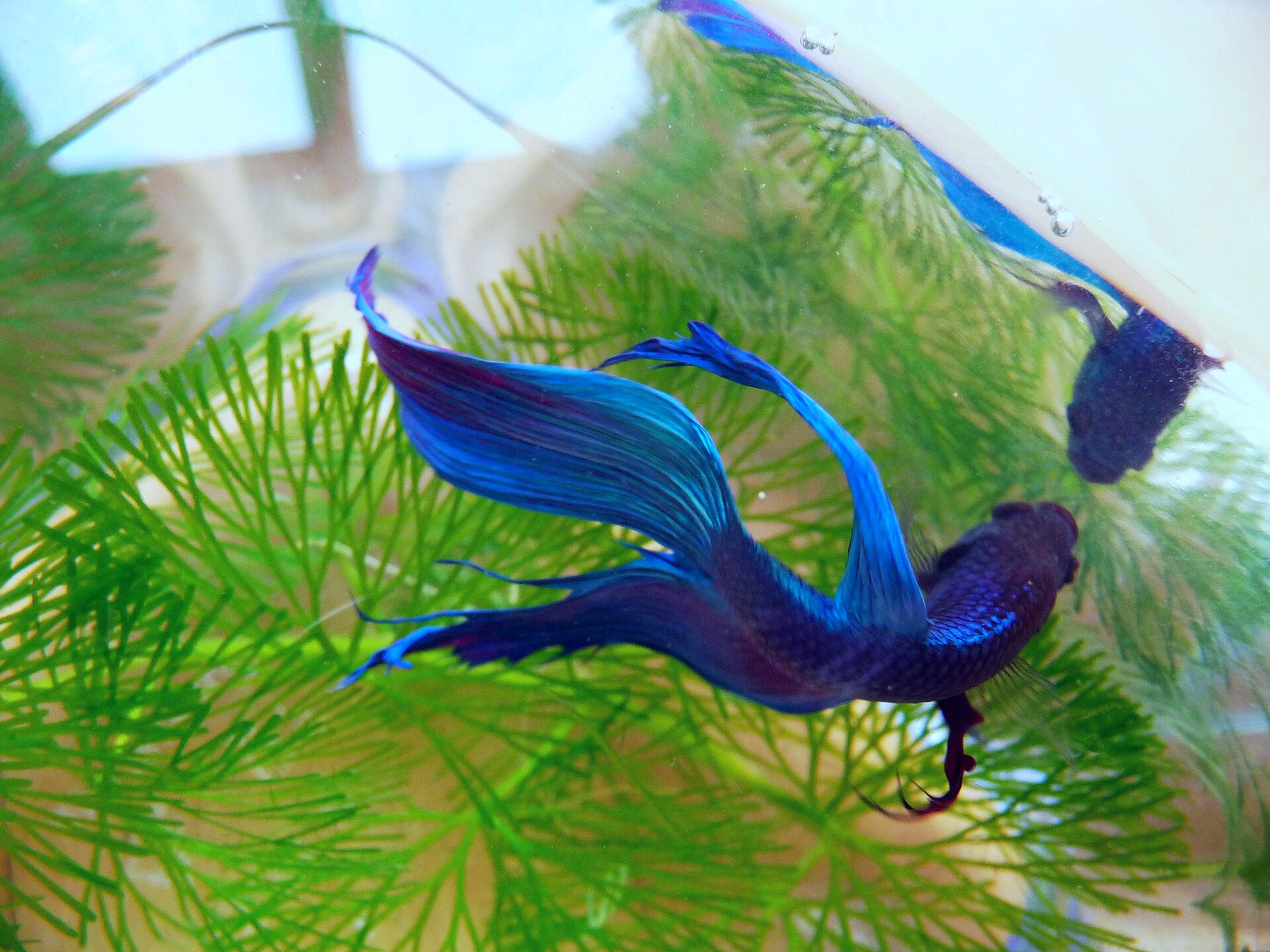 BettaBetta splendens
 Common or Comet GoldfishCarassius auratus
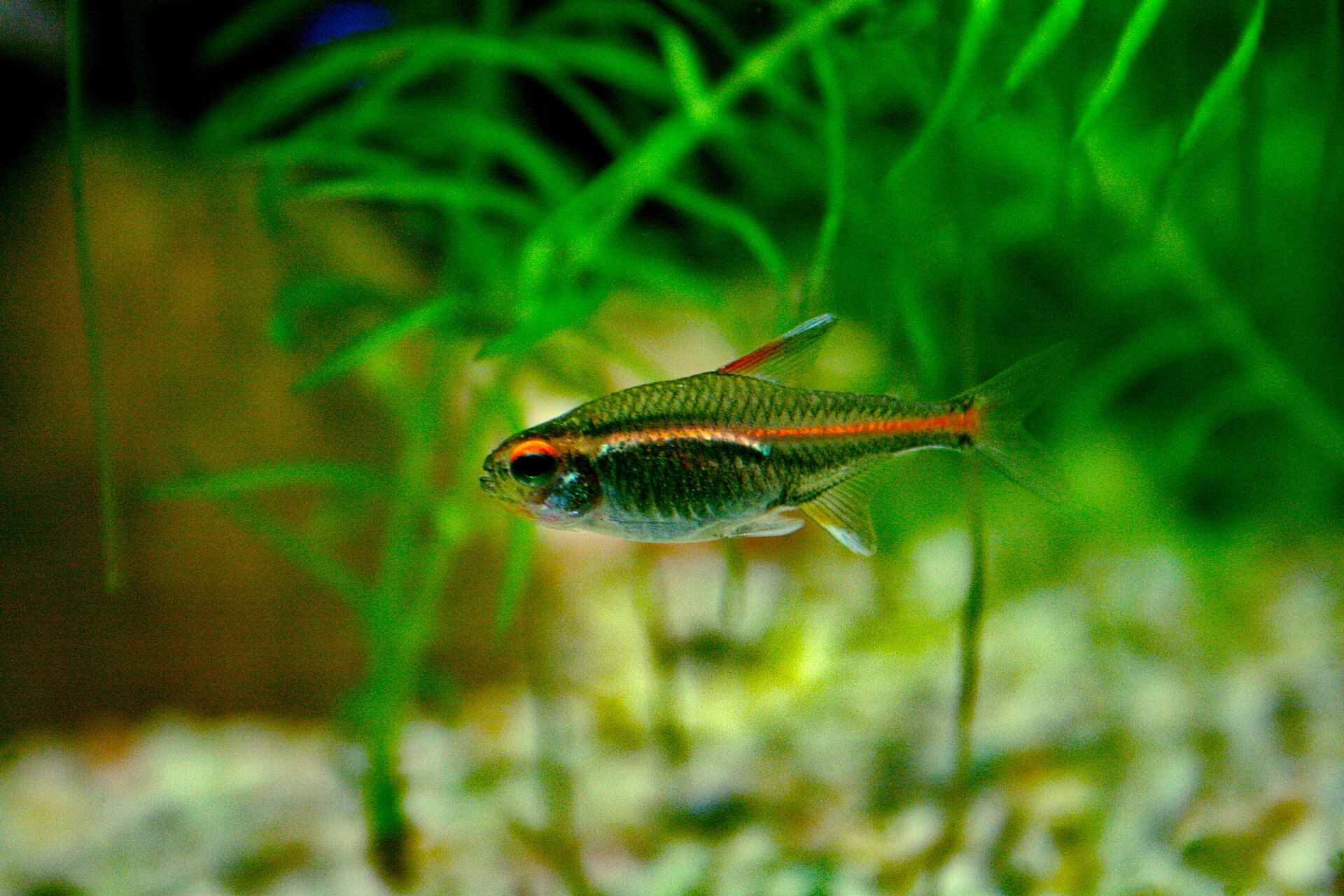 Glowlight TetraHemigrammus erythrozonus
 Clown PlecoPanaqolus maccus
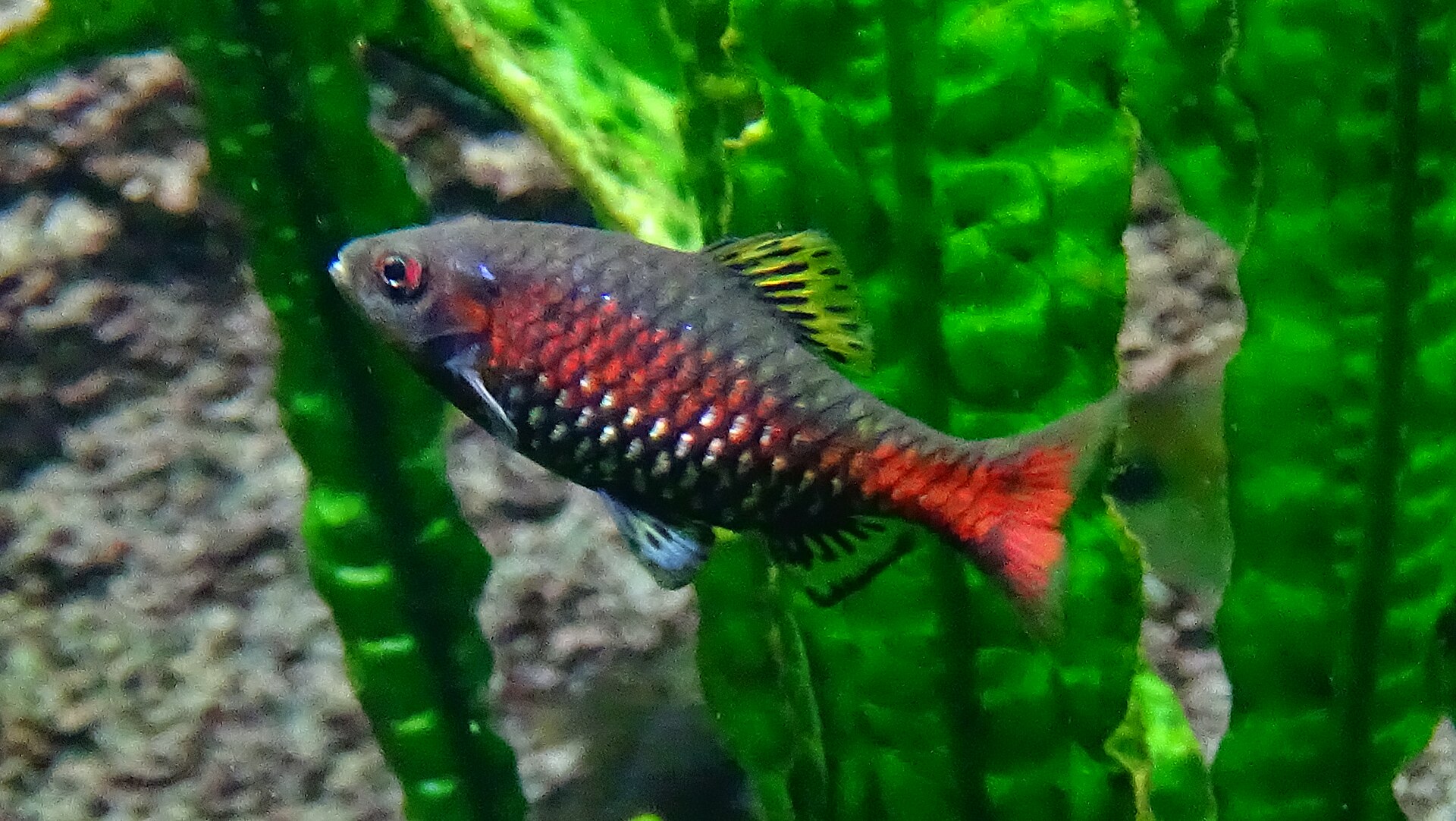 Odessa BarbPethia padamya
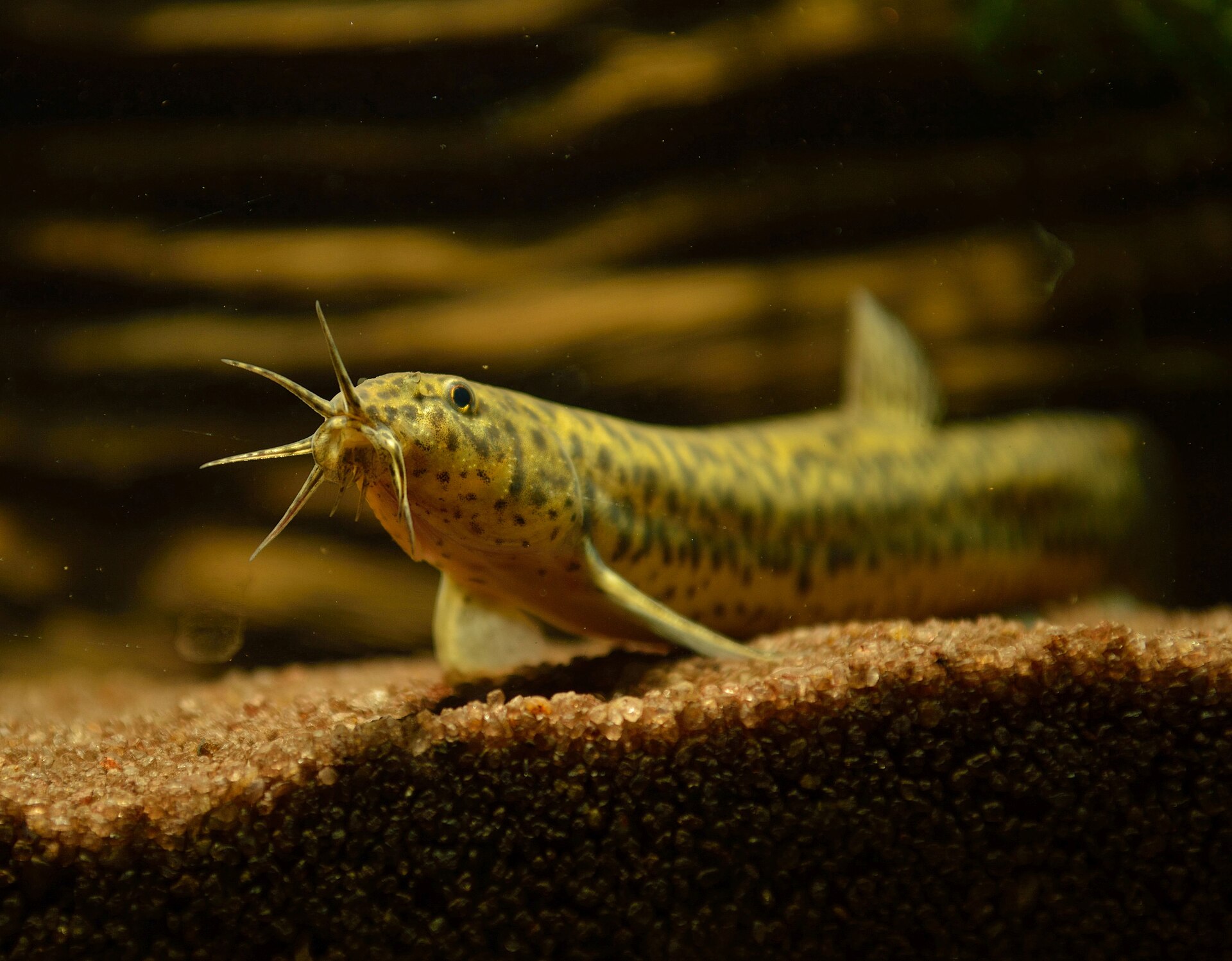 Weather or Dojo LoachMisgurnus anguillicaudatus
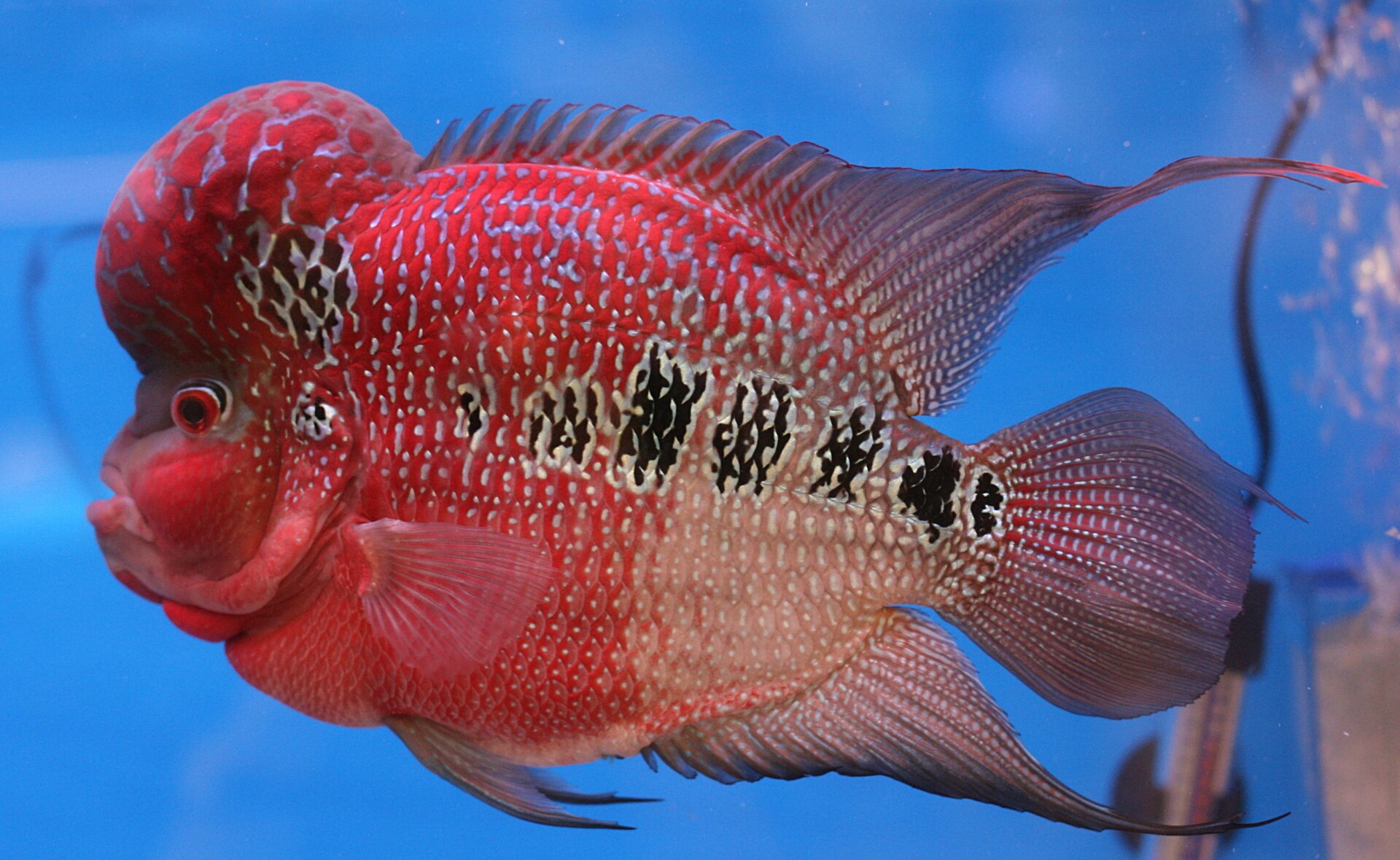 Flowerhorn CichlidHybrid cichlid
 Electric Yellow LabLabidochromis caeruleus
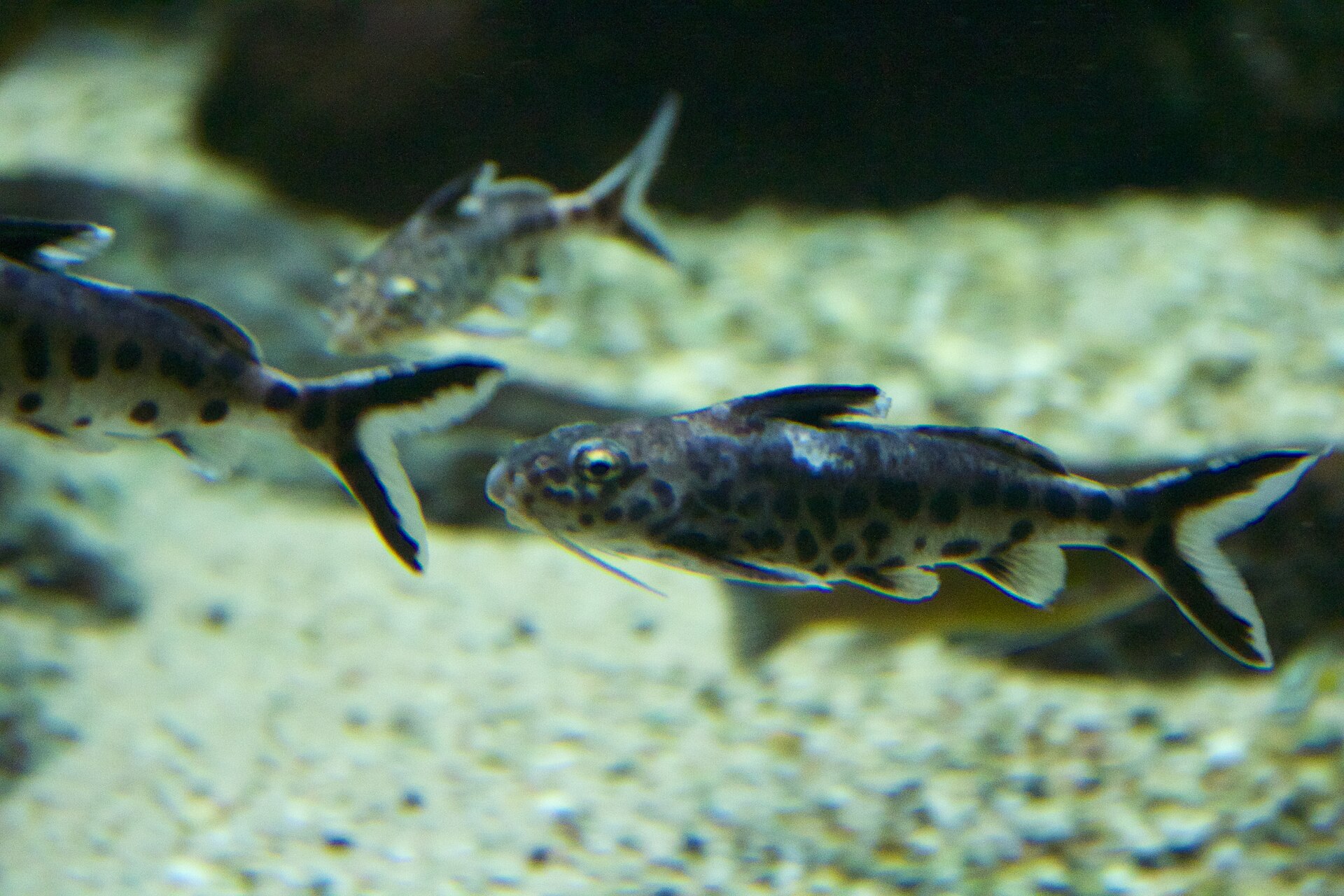 Dwarf SynodontisSynodontis petricola
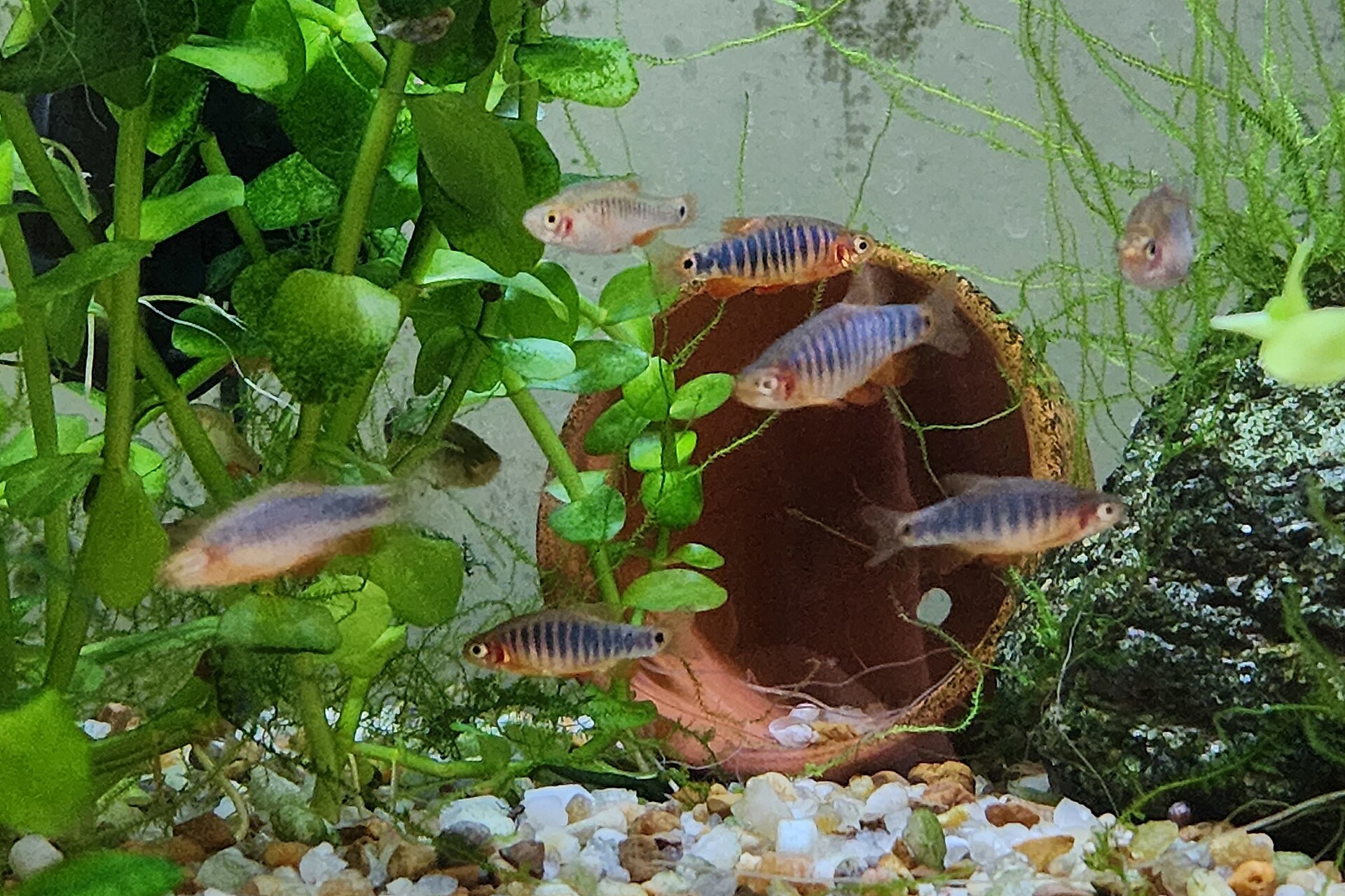 Emerald Dwarf RasboraDanio erythromicron
Start with the sales tank, not the prettiest fish
Stand back for a moment before anyone approaches the tank. Watch how the group uses the space, how quickly the gill covers move, whether fish hold a level posture, and whether one animal is isolated, pinned in a corner, repeatedly rubbing, or struggling at the surface. Then inspect the fish more closely.
Look beyond the candidate. Dead fish, several animals with the same spots or damaged fins, widespread rapid breathing, cloudy water, or obvious waste buildup are reasons to pause. Ask whether nearby tanks share filtration, when the shipment arrived, what the fish are eating, and whether staff can show the candidate responding to food.
No visual check can guarantee that a fish is free of infection or parasites. Prepare a separate quarantine setup before the purchase and avoid sharing wet equipment with the established aquarium. If welfare is already a concern, leave the fish in the retailer's care and seek qualified guidance rather than taking an unplanned rescue into a community tank.
- Watch the whole tank from a distance before selecting an individual.
- Compare breathing rate and posture with active tankmates of the same species.
- Check both sides of the body, the belly, eyes, mouth, gill covers, fins, and skin.
- Look for a filled-out body appropriate to the species, not a hollow belly or sudden swelling.
- Ask to see the fish move and, when practical, show interest in food.
- Confirm the label, scientific name, current diet, arrival date, and expected adult size.
- Check the fish against your saved tank in TankWise before committing to the purchase.
- Move every new arrival through a separate quarantine process.
Betta
Betta splendens
What to notice
A Betta may pause on a leaf, take air from the surface, or flare briefly at a neighbor or reflection. Those behaviors can be normal. The useful question is whether the fish can right itself, move through the water without obvious effort, respond to its surroundings, and settle again without persistent distress.
Judge fin condition against the variety. A crowntail has deliberately reduced webbing, while a long-finned male naturally moves differently from a short-finned plakat. Look for intact, consistent edges rather than assuming every uneven outline is damage.
Common or Comet Goldfish
Carassius auratus

What to notice
Common and comet Goldfish should have the streamlined body and single tail expected for their type. Juveniles are often sold very small, so condition at purchase must be separated from the substantial space, filtration, and adult-size plan they will need later.
A strong candidate swims level, turns cleanly, and can rise and descend without rolling. Brief bottom foraging is normal. Continuous floating, sinking, spinning, or exhaustion is not something to dismiss as a quirky Goldfish habit.
Glowlight Tetra
Hemigrammus erythrozonus

What to notice
A healthy Glowlight Tetra usually makes more sense in the group than alone. Watch for coordinated, responsive swimming and individuals that rejoin the school after investigating. Lighting, background, stress, age, and sex can affect color, so the orange stripe is useful context but not a stand-alone health test.
Small tetras can lose condition quietly. Look along the back and belly line for a full but not swollen profile, and compare the thinnest fish with several tankmates before choosing.
Clown Pleco
Panaqolus maccus

What to notice
Clown Plecos are built to cling, graze, and shelter around wood and cover. Hiding under bright store lights can be normal, so ask staff to help you see the underside, mouth, belly, and both eyes rather than judging inactivity alone.
Body condition matters especially in a recently shipped pleco. The abdomen should not look sharply caved in, and the sucker mouth should appear intact. Confirm the scientific name and expected adult size because a generic 'pleco' label is not specific enough for long-term planning.
Odessa Barb
Pethia padamya

What to notice
Odessa Barbs are active group fish. Mature males may show the famous red stripe strongly, while females and younger fish can be much plainer. Do not reject a healthy female because she lacks male display color, and do not let a vivid male's color distract from damaged fins or poor body condition.
Some chasing and display can be normal in a lively group. Focus on whether every fish can rejoin the group, feed, and use the aquarium without being continuously pinned, bitten, or exhausted.
Weather or Dojo Loach
Misgurnus anguillicaudatus

What to notice
Weather Loaches are elongated, bottom-oriented fish with conspicuous barbels. They may burrow, become active with pressure changes, and take atmospheric air. A single trip to the surface is therefore different from continuous respiratory distress, especially when the fish otherwise explores, rests normally, and holds good condition.
Inspect every barbel and the smooth body surface closely. This is a cool-water species that can become large, and it is documented as nonindigenous in parts of the United States. Check current local sale and possession rules, plan a secure covered aquarium, and never release an aquarium animal outdoors.
Flowerhorn Cichlid
Hybrid cichlid

What to notice
Flowerhorns are ornamental hybrid cichlids selected into many lines. Head-hump size, body shape, markings, and color vary widely, so a seller's grade is not the same as a health assessment. Look for functional swimming, a mouth that closes, clear eyes, intact fins, and skin without erosion.
A confident response to a person can be normal, as can intense territorial behavior. Aggression becomes a welfare issue when the fish is repeatedly injuring its mouth or head against glass, decorations, dividers, or tankmates.
Electric Yellow Lab
Labidochromis caeruleus
.jpg)
What to notice
Electric Yellow Labs are Lake Malawi cichlids, and yellow tone or black fin edging can vary with age, sex, line, lighting, and condition. Judge color alongside body fullness, breathing, mouth condition, and how the fish moves through rockwork and the social group.
This species is a mouthbrooder. A female carrying eggs or fry may have an enlarged throat, hide more, and refuse food. That can be normal reproductive behavior, but the store should be able to explain it; do not assume mouthbrooding when the fish also has rapid breathing, poor posture, sores, or severe weight loss.
Dwarf Synodontis
Synodontis petricola

What to notice
Dwarf Synodontis are rock-associated catfish that may retreat from bright light and shelter under ledges. Ask to observe them in a shaded area or during feeding rather than treating hiding as proof of illness. The belly, barbels, eyes, skin, and fin edges should still be inspected.
The trade name 'dwarf Synodontis' is used loosely. Confirm the scientific name on the invoice or stock list and check the expected adult size; closely related Tanganyikan Synodontis can be difficult to distinguish in a quick store view.
Emerald Dwarf Rasbora
Danio erythromicron

What to notice
Despite its trade name, the Emerald Dwarf Rasbora is currently placed in the genus Danio. These tiny group fish can look pale in a bright or exposed store tank, and mature males may show stronger bars and orange-red fins than females. Compare several fish instead of selecting by color alone.
Because the species is small, a hollow belly, curved spine, rapid breathing, or inability to compete at feeding can be easy to miss. Watch the group long enough to see individuals rejoin, hold position, and take appropriately sized food.
Sources and further reading
These references provide scientific or technical background and disclose how TankWise works. External references do not imply that every current TankWise catalog value was sourced from, or reviewed by, those organizations. See the checker methodology and known limits for that distinction.
- The Ornamental Fish TradeUniversity of Florida IFAS Extension
Guidance on researching a species and source, preparing suitable care, and quarantining new aquatic animals before introduction.
- Preparation of Ornamental Fish for ShippingUniversity of Florida IFAS Extension
Technical background on examining fish appearance and behavior, including fins, skin, mucus, spots, body condition, and abnormal behavior.
- Common Signs of Illness in FishMerck Veterinary Manual
Veterinary reference table for broad warning signs such as appetite, breathing, color, skin, scales, swelling, weight, and swimming changes.
- Care and Feeding of Your Pet FishUniversity of Illinois College of Veterinary Medicine
Veterinary guidance on normal activity, coloration, appetite, abnormal behavior, quarantine, and seeking qualified help instead of relying on an online diagnosis.
- Betta splendens species summaryFishBase
Taxonomy, distribution, biology, air-breathing, and aquarium-trade context for Betta splendens.
- Betta Fish Care GuideAquarium Co-Op
Aquarium-industry context on Betta behavior, warm water, gentle current, territory, and long-finned varieties.
- Panaqolus maccus species summaryFishBase
Taxonomy, freshwater habitat, distribution, and documented maximum standard length for the Clown Pleco.
- Care Guide for LoachesAquarium Co-Op
Aquarium-industry context on Weather Loach size, cool-water care, activity, and bottom-oriented behavior.
- Pond Loach species profileU.S. Geological Survey Nonindigenous Aquatic Species Database
Current taxonomy, identification, size, cool-water ecology, atmospheric air-breathing, and nonindigenous occurrence context for Misgurnus anguillicaudatus.
- Labidochromis caeruleus species summaryFishBase
Taxonomy, Lake Malawi distribution, aquarium use, and mouthbrooding reproductive behavior for the Electric Yellow Lab.
- A taxonomic revision of the Lake Tanganyikan SynodontisFlorida Museum of Natural History
Scientific diagnostic and taxonomic context for S. petricola, S. lucipinnis, and related Lake Tanganyikan catfish.
- Danio erythromicron taxonomy recordNational Center for Biotechnology Information
Current taxonomic placement for the aquarium fish commonly called Emerald Dwarf Rasbora.
- Danio Care GuideAqueon
Aquarium-industry background on active danio behavior, group keeping, feeding, cover, and general aquarium care.
- TankWise checker methodology and known limitsSimply Submerged Aquatics
The documented inputs, rules, score bands, safety caps, and limitations behind the TankWise compatibility preview.
Frequently asked questions
Can a fish that looks healthy still carry disease?
Yes. A visual store check lowers avoidable risk but cannot prove that a fish is free of pathogens or parasites. Quarantine every new arrival separately before it shares water or wet equipment with the established aquarium.
Should I buy from a tank that contains a dead or visibly sick fish?
Pause the purchase. Ask the retailer what happened, whether the tanks share filtration, and what action is being taken. Choosing a different individual from the same water does not remove shared exposure.
Is a hiding or pale fish automatically sick?
No. Lighting, shipping stress, social position, sex, age, and species-normal behavior can change color and visibility. Combine those signs with breathing, posture, body condition, skin, fins, eyes, feeding response, and the condition of the whole tank.
How long should I watch a fish before buying it?
There is no universal number of minutes. Watch long enough to see breathing, posture, controlled movement, response to the group or environment, and ideally a feeding response. Do not let a rushed bagging process replace observation.
Does this guide diagnose fish disease?
No. The guide identifies broad reasons to pause a purchase. Similar signs can have different causes, so suspected illness should be assessed by the retailer and, when needed, a fish-health veterinarian or other qualified aquatic animal-health professional.
Where does TankWise fit into choosing a fish?
Use the guide to screen the individual fish, then use TankWise to compare the species with the aquarium you already own. The checker considers adult size, volume, water-range overlap, current livestock, social needs, projected load, and selected risk signals; it cannot certify health or guarantee behavior.